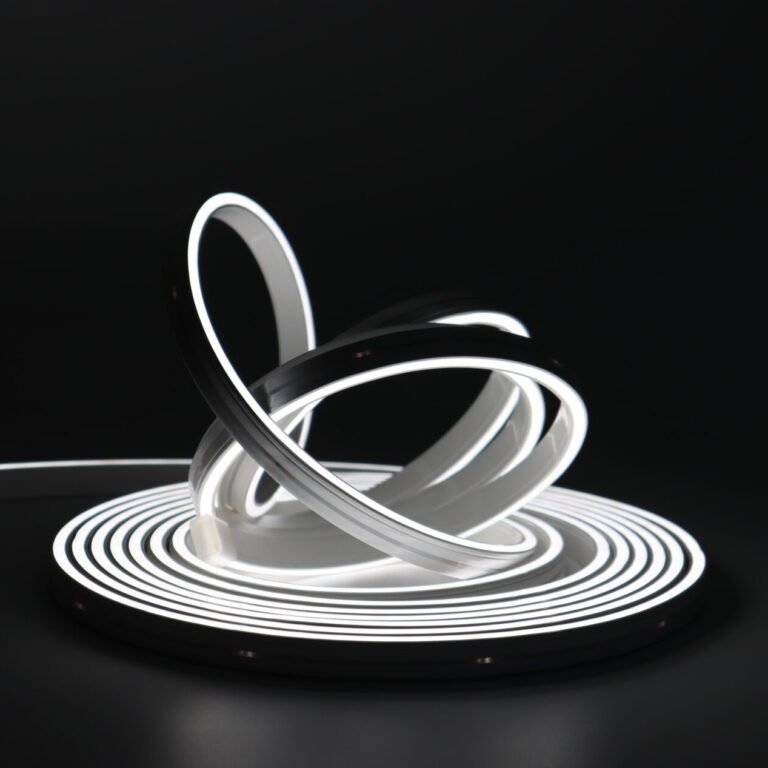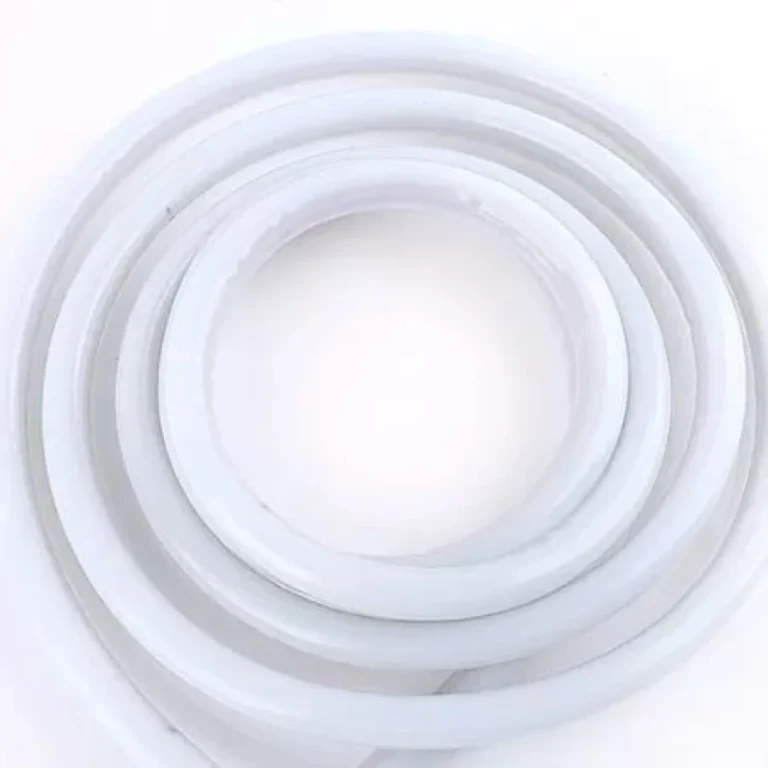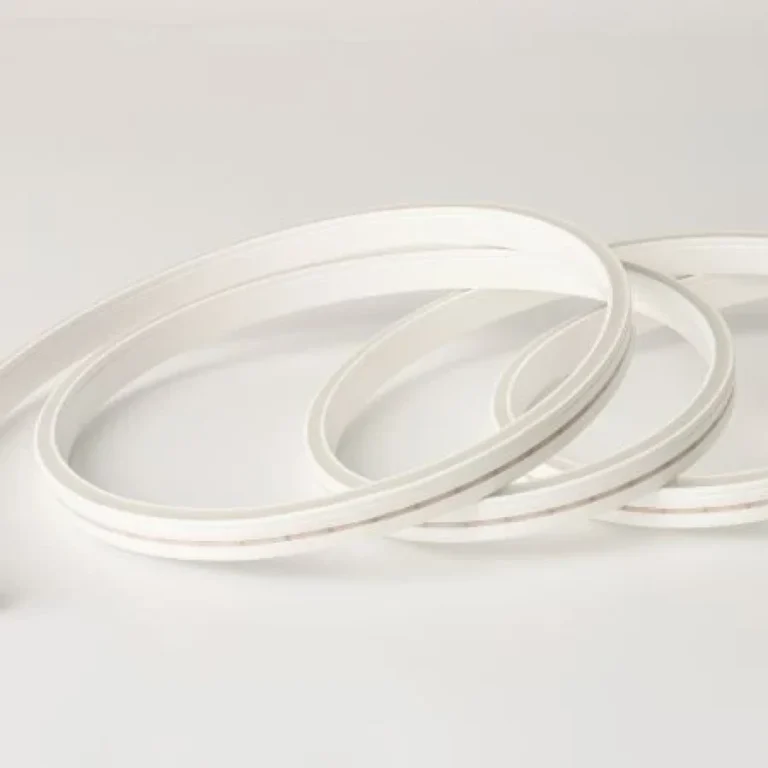
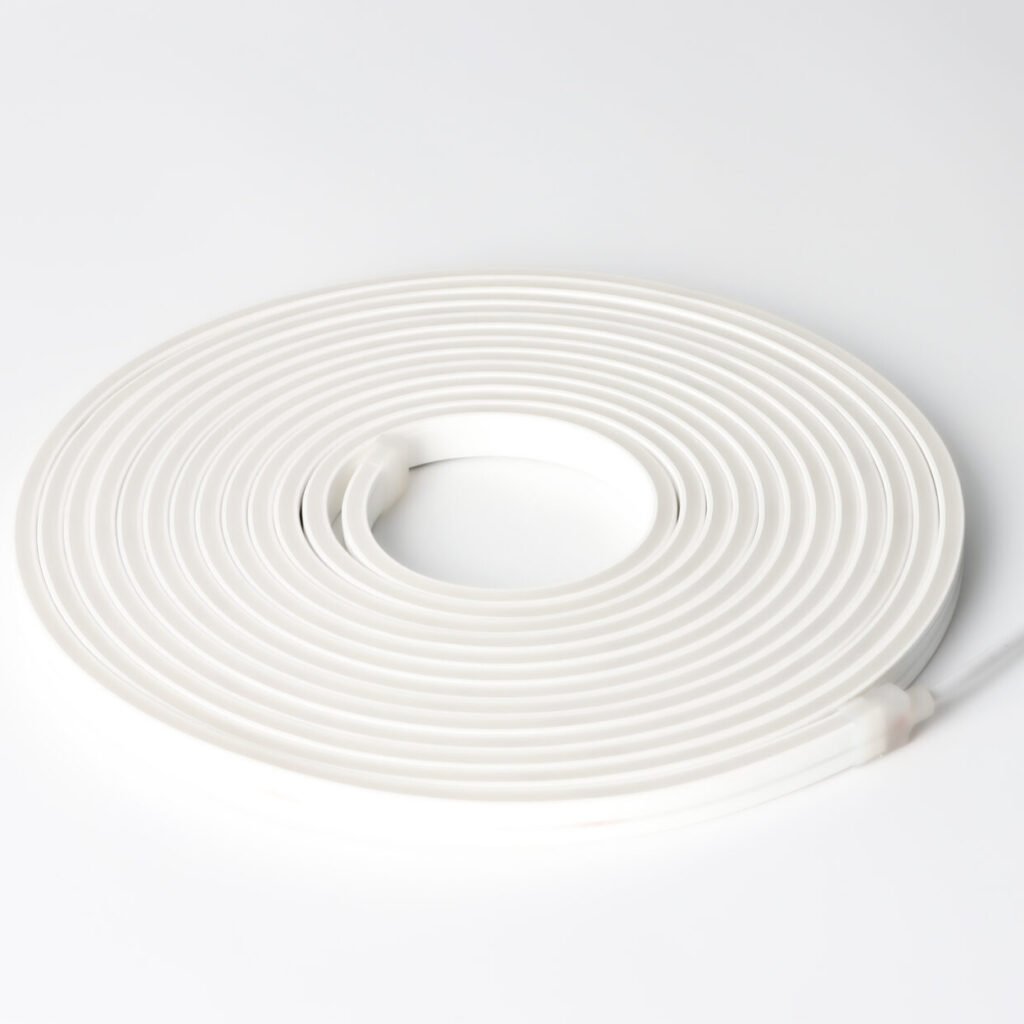
Why Choose Top Bend Neon Flex?
The bending direction determines whether the light follows the intended contour without twisting, shadowing or mechanical stress. Top bend construction keeps the emitting face visible while the strip follows vertical curves. Final electrical and mechanical limits depend on the selected profile, LED circuit and project environment. HHY confirms the buildable specification before sampling.
Key Product Advantages
- Consistent Light Line: Matched LED pitch, silicone optics and profile depth reduce visible dots and brightness variation along curves.
- Controlled Bending: The vertical bending axis is designed for arches, waves and upward or downward contours without rotating the light face.
- Project-Specific Build: Specify section size, voltage, color system, IP protection, cable exit and connector details around the installation.
Recommended Specification Starting Points
| Design item | Typical options | Confirm for production |
|---|---|---|
| Input voltage | 12V DC or 24V DC | Run length, feed location and voltage-drop limit |
| Light color | Single color, tunable white, RGB or RGBW | CCT/CRI target, controller and white-channel quality |
| Protection | Indoor, moisture-resistant or IP-rated build | Environment, sealing method and cable entry |
| Mechanical | Multiple silicone section sizes and bend radii | Drawing, minimum bend radius and mounting channel |
| Supply format | Reels, cut lengths or assembled modules | Cut plan, lead length, connectors, labels and quantity |
Top Bend vs. Side Bend Neon Flex
| Selection point | Top bend | Side bend |
|---|---|---|
| Bending direction | Up/down relative to the emitting surface | Left/right relative to the emitting surface |
| Best suited to | Arches, waves and vertical contour changes | Letters, lateral curves and plan-view outlines |
| Key drawing detail | Vertical bend radius and mounting plane | Horizontal bend radius and side routing |
Recommended Applications
- Architectural Outlines: Trace arches, façade lines, ceiling features and curved transitions with a continuous visible light surface.
- Signage and Displays: Build letters, borders and display accents where the routing follows vertical curves and consistent brightness matters.
- Furniture Integration: Add clean illuminated contours to cabinets, counters, shelving and custom furniture with planned cable exits.
Frequently Asked Questions
How do I know whether top bend or side bend is correct?
Choose top bend for vertical curves (arches, waves, upward/downward contours) and side bend for lateral/horizontal curves (letters, flat surface outlines).
Can top bend neon flex be supplied in custom lengths?
Yes. HHY can provide custom cut lengths, pre-installed lead wires, connectors and labeled assemblies according to your cut plan.
Can it be used outdoors?
Yes. IP-rated waterproof builds and proper sealing methods can be specified for moisture-resistant or outdoor environments.
What information is needed for a quotation?
Send HHY your installation drawing, required voltage, light color/CCT, total length, control method and IP protection requirements.
OEM & Project Support
Contact HHY(Xiamen) Lighting Technology Co.,Ltd with your specification or drawing for product selection, sampling and quotation support.