
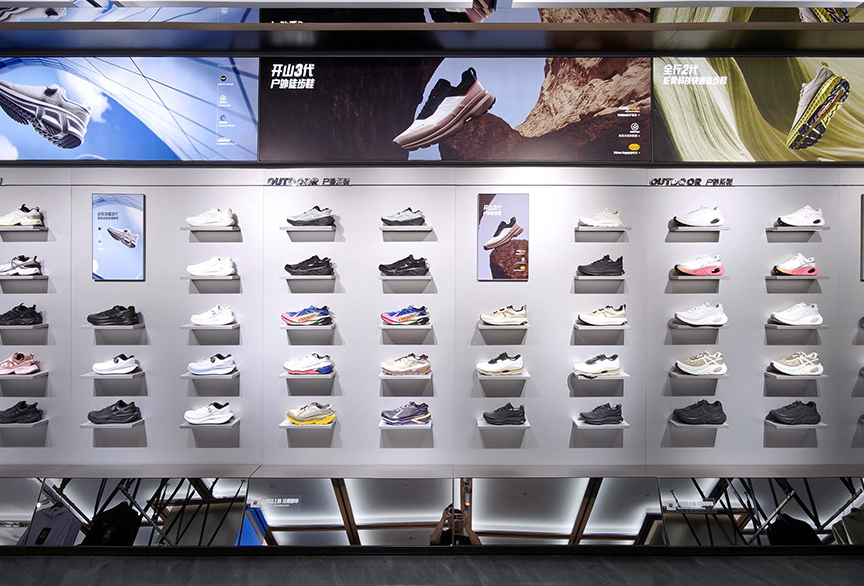
Build the lighting around the sign depth and face material
Sign lighting that stays uniform across letters, panels and production batches
A sign may look simple from the street, yet its depth, face transmission, return material and service access determine whether the result is uniform or full of bright spots.
HHY helps sign makers and branded-environment suppliers choose the light engine, spacing, profile or silicone form, driver and wiring plan for prototypes and repeat programs.
Start with the application constraints
The right system is selected from the visual target, mounting detail, electrical limits and repeat-installation requirements.
Hotspots on the Face
Balance source spacing, depth and diffuser transmission.
Uneven Letters
Standardize lengths, feed points and output across different shapes.
Color Mismatch
Define CCT, RGB channel quality and batch control before production.
Service Downtime
Plan replaceable drivers, accessible joints and labeled wiring.
Recommended configuration starting points
Use these as engineering starting points, then confirm the complete assembly in a sample.
| Project priority | Recommended starting point | What HHY confirms |
|---|---|---|
| Shallow light box | High-density SMD or COB | Face transmission and source spacing |
| Channel letters | Flexible strip or compact modules | Letter depth, bends and wire exits |
| Color-changing sign | RGBW or addressable strip | Protocol, scenes and white quality |
| Exterior outline | IP67 neon flex | UV, drainage and mounting clips |
Recommended product configurations
These product families narrow the specification; final voltage, power, dimensions and accessories are matched to the project.
From project brief to repeatable assembly
Move from artwork and section depth to a repeatable sign kit
- Review the application: dimensions, materials, viewing position, cable routes and service access.
- Define the target: brightness, CCT, CRI, uniformity, glare and control behavior.
- Build the system: light engine, profile or enclosure, driver, wiring and mounting accessories.
- Prototype and verify: check appearance, temperature, weather exposure where relevant, and installation sequence.
- Prepare for repetition: lock cut lengths, leads, labels, packaging and production documentation.
What can be customized
HHY focuses on the variables that determine whether the system fits, performs and repeats reliably.
Light & Electrical
CCT, CRI, LED density, power, voltage, cut interval and dimming behavior.
Mechanical Fit
PCB width, profile or silicone shape, diffuser, wire exit, clips and exact cut lengths.
Project Kit
Pre-cut leads, connectors, drivers, controls, labels and project-specific packaging.
Useful next step
Move from application intent to a buildable specification
This page explains the project logic. Compare the relevant product families in our Products hub, or review the related Cabinet & Furniture Lighting Solution when furniture integration is part of the scope.
LED sign lighting FAQ
How do you prevent hotspots in a light box?
Coordinate source density and spacing with the box depth, reflective interior and face transmission, then test a representative section.
Can sign lighting change color dynamically?
Yes. RGBW or addressable systems can support scenes and animation when the controller, power and data layout are designed together.
Can HHY prepare repeat sign assemblies?
Yes. Approved lengths, leads, connectors, labels and drivers can be packaged by sign section or project zone.
Bring us the application, not only a wattage
Develop sign lighting that looks consistent at installation
Share artwork, section depth, face material, target brightness and installation environment. HHY will recommend a buildable lighting and wiring system.